Why Does Bread Go Stale? It’s Not Just About Drying Out
Most people believe bread goes stale simply because it loses water. After all, fresh bread is soft and fluffy, while stale bread becomes dry and hard.
But is moisture really the whole story?
Why Drying Out Isn’t the Whole Story?
To answer this question, we carried out a simple experiment.
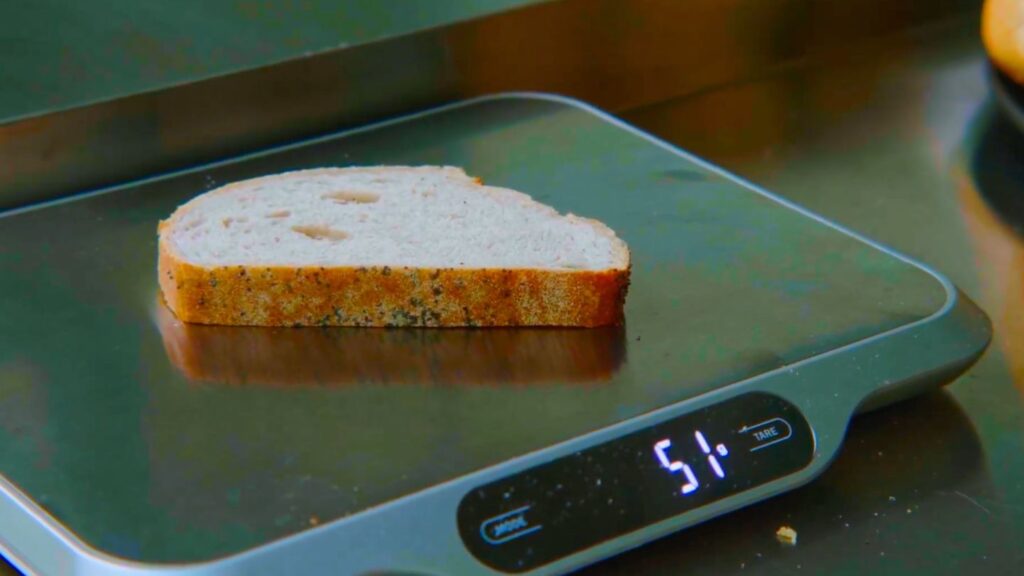
A fresh slice of bread was left uncovered for several days. During that time, its weight dropped from 51 g to 33 g, confirming that it had lost a considerable amount of moisture.
But water loss wasn’t the whole story.
We also stored bread in the refrigerator and the freezer. Although both loaves lost very little weight, the refrigerated bread became noticeably firmer, while the frozen bread remained almost as fresh as when it was first stored.
Why Bread Becomes Stale: The Role of Starch Retrogradation
The answer lies in starch retrogradation.
Freshly baked bread contains starch molecules that are flexible and loosely arranged, giving the bread its soft, airy texture.
As the bread cools and ages, these starch molecules slowly reorganize into a more ordered, crystalline structure. This process makes the crumb firmer and less elastic, creating the familiar texture of stale bread.
In other words, bread doesn’t simply dry out – it changes its internal structure.
Should You Store Bread in the Fridge or Freezer?
The answer depends on how long you plan to keep it.
Refrigeration slows bread staling, but it doesn’t stop it. The starch molecules continue to reorganize, so the bread gradually becomes firmer despite losing very little moisture.
Freezing is a much better solution. At around -18°C, starch retrogradation is almost completely halted, preserving the bread’s fresh texture until it’s thawed.
So, if you won’t finish a loaf within a few days, freezing is the best way to keep it fresh.
Can You Make Stale Bread Fresh Again?
Many people place stale bread in the microwave or oven to soften it.
Surprisingly, it works – but only temporarily.
Heating disrupts the crystalline starch structure, making the bread soft and fluffy again. However, as the bread cools, the starch molecules reorganize once more, and the bread quickly becomes stale again.
Final Thoughts
Although bread does lose moisture over time, that’s only part of the story. The biggest change happens inside the loaf, where starch molecules slowly reorganize and alter its texture.
Understanding this simple piece of food chemistry also helps reduce waste. Freezing bread preserves its freshness, while reheating can briefly restore its softness – giving stale bread a second chance instead of sending it to the bin.
The next time you pick up a stale loaf, remember: it hasn’t just dried out. Its chemistry has changed.
Food Meets Science is gathering place to connect all food lovers from all over the world and create a community of all those for whom food and science is passion.