Stop Burning Your Food: Understanding the Maillard Reaction
Why Does Brown Food Taste Better? The Maillard Reaction Explained
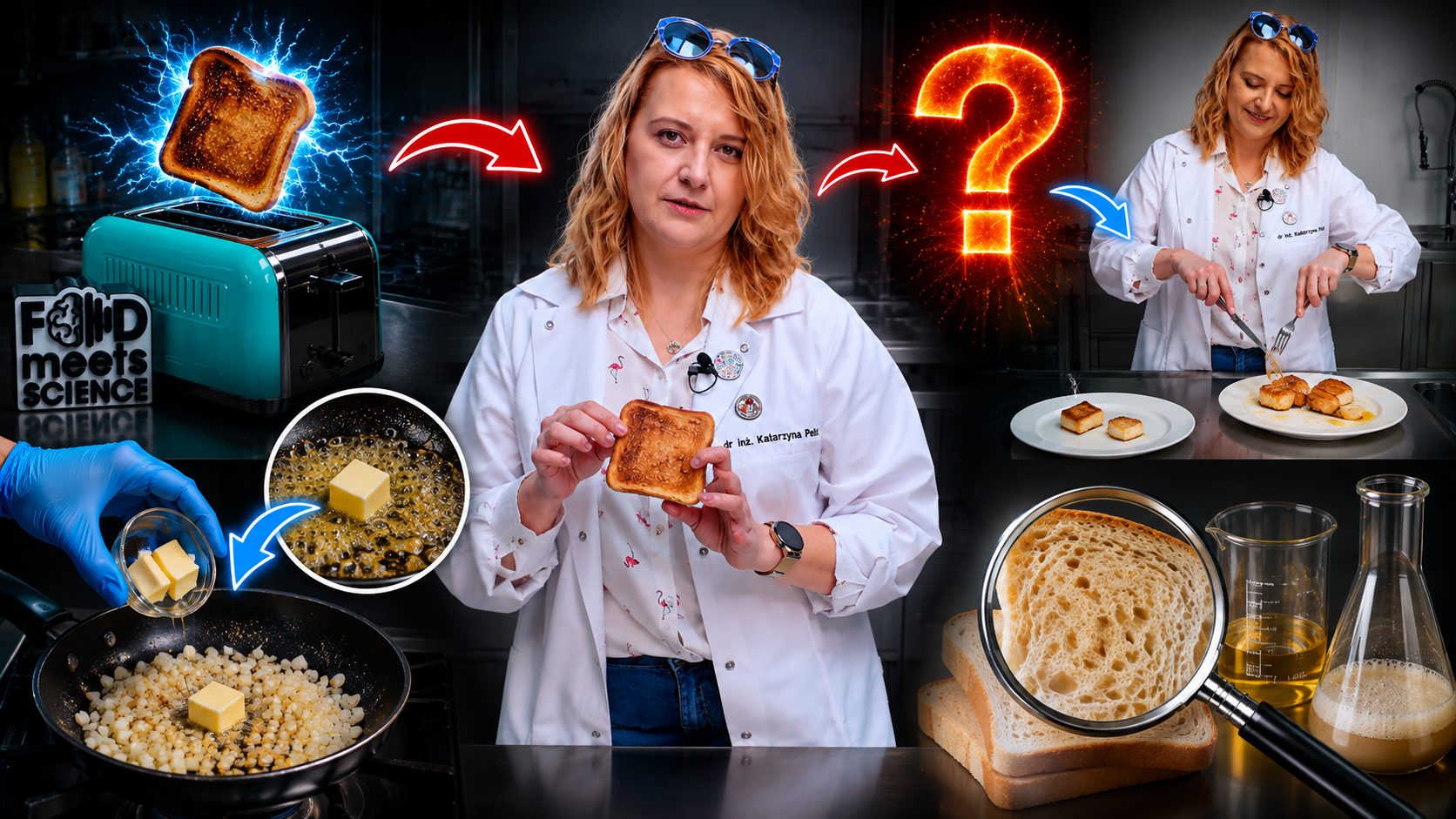
Golden toast, caramelized onions and perfectly seared chicken all have one thing in common – they owe their irresistible flavor to a remarkable chemical process known as the Maillard reaction.
This reaction is responsible for the rich aromas, complex flavors and appetizing brown color that make cooked food so enjoyable. But what exactly happens during cooking, and why doesn’t every heated food turn brown?
What Is the Maillard Reaction?
The Maillard reaction is a chemical reaction between amino acids and reducing sugars that occurs when food is heated.
As the temperature rises – typically above 140°C (285°F) – these compounds react to create hundreds of new molecules responsible for: rich, roasted flavors, appealing aromas, and the characteristic golden-brown color of cooked food.
This is why toasted bread smells so different from fresh bread, and why grilled meat tastes much more complex than boiled meat.
Why Does Toast Taste Better Than Bread?
Fresh bread is soft, pale and mildly sweet.
Place the same slice in a toaster, and heat transforms it completely. The bread becomes crispy, develops a golden-brown crust and releases the familiar aroma we associate with fresh toast.
The only thing that changed was temperature.
By heating the bread, the Maillard reaction begins, creating entirely new flavor and aroma compounds that weren’t present before.
Why Do Caramelized Onions Taste So Good?
Onions provide an excellent example of how cooking conditions influence browning.
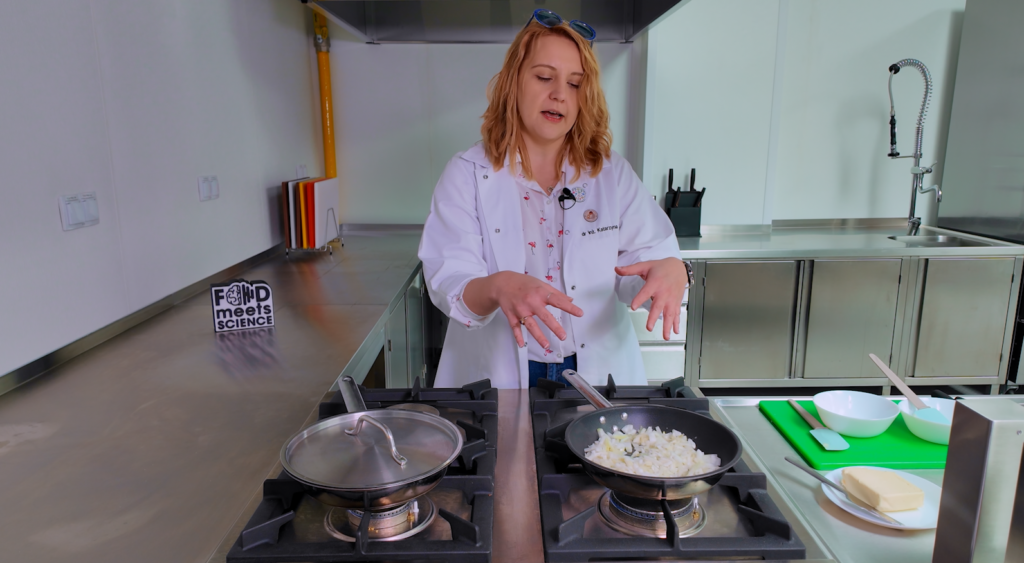
We cooked onions in two different ways:
in an uncovered pan, allowing moisture to escape,
in a covered pan, trapping steam inside.
The uncovered onions browned beautifully, while the covered onions became soft but stayed pale.
The difference is moisture. As water evaporates, the surface becomes hot enough for the Maillard reaction to occur. With the lid on, trapped moisture keeps the temperature lower, limiting browning.
Onions also contain natural sugars that caramelize during cooking, adding sweetness and depth of flavor.
Why Does Chicken Turn Brown?
Chicken naturally contains proteins and amino acids, making it an ideal candidate for the Maillard reaction.
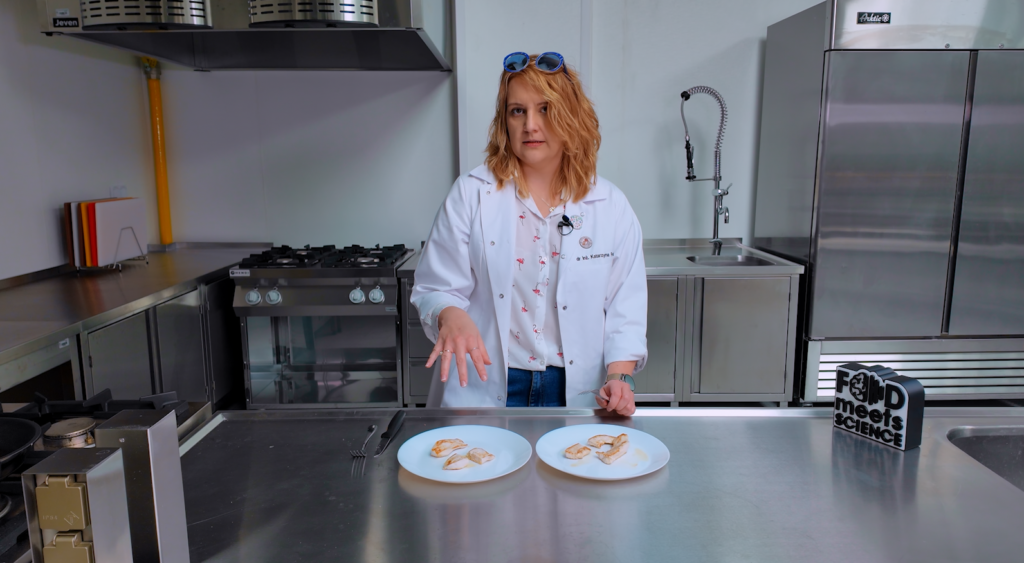
During our experiment, chicken cooked with a small amount of oil browned faster than chicken cooked in a dry pan. The oil improved heat transfer, helping the surface reach browning temperatures more quickly.
Although both pieces were fully cooked, the browned chicken developed a richer aroma and a more appealing appearance.
Does Darker Always Mean Better?
Not necessarily.
Light golden browning creates the pleasant flavors and aromas we enjoy, but excessive browning produces bitter compounds and burnt flavors.
As chefs often say, there’s a fine line between perfectly caramelized and burnt.
More Than Just Color
Golden color isn’t simply a sign that food has been cooked. It’s evidence that thousands of chemical reactions have taken place, creating the flavors and aromas we love.
Understanding the Maillard reaction helps explain why cooking methods matter and why small changes in temperature, moisture or cooking time can completely transform the final dish. Sometimes, the secret ingredient isn’t another spice. It’s simply the science behind the heat
Food Meets Science is gathering place to connect all food lovers from all over the world and create a community of all those for whom food and science is passion.